In the North Australian landscape one will find few places where the link between ancient art, living culture and the land is as plain as at the rock art sites of Kakadu National Park. Ubirr, Burrungkuy (Nourlangie), Anbangbang Gallery and Nanguluwur are the principal destinations, all of them presenting their own cultural narratives, walking conditions and artworks.
My name is Nicholas Fairchild and I prefer my travel advice with its boots on. Those who make plans for the rain and heat in Kakadu, and have regard for cultural responsibilities, are well rewarded. It is no place for a quick tick-box exercise; yet you will see people come at midday and putter about in the sun without so much as a bottle of water, then be mystified when the sandstone cliffs have the better of them. This is an account of how to approach the Aboriginal rock art sites of Kakadu with a bit more time and respect.
The Escarpment Heritage of Kakadu
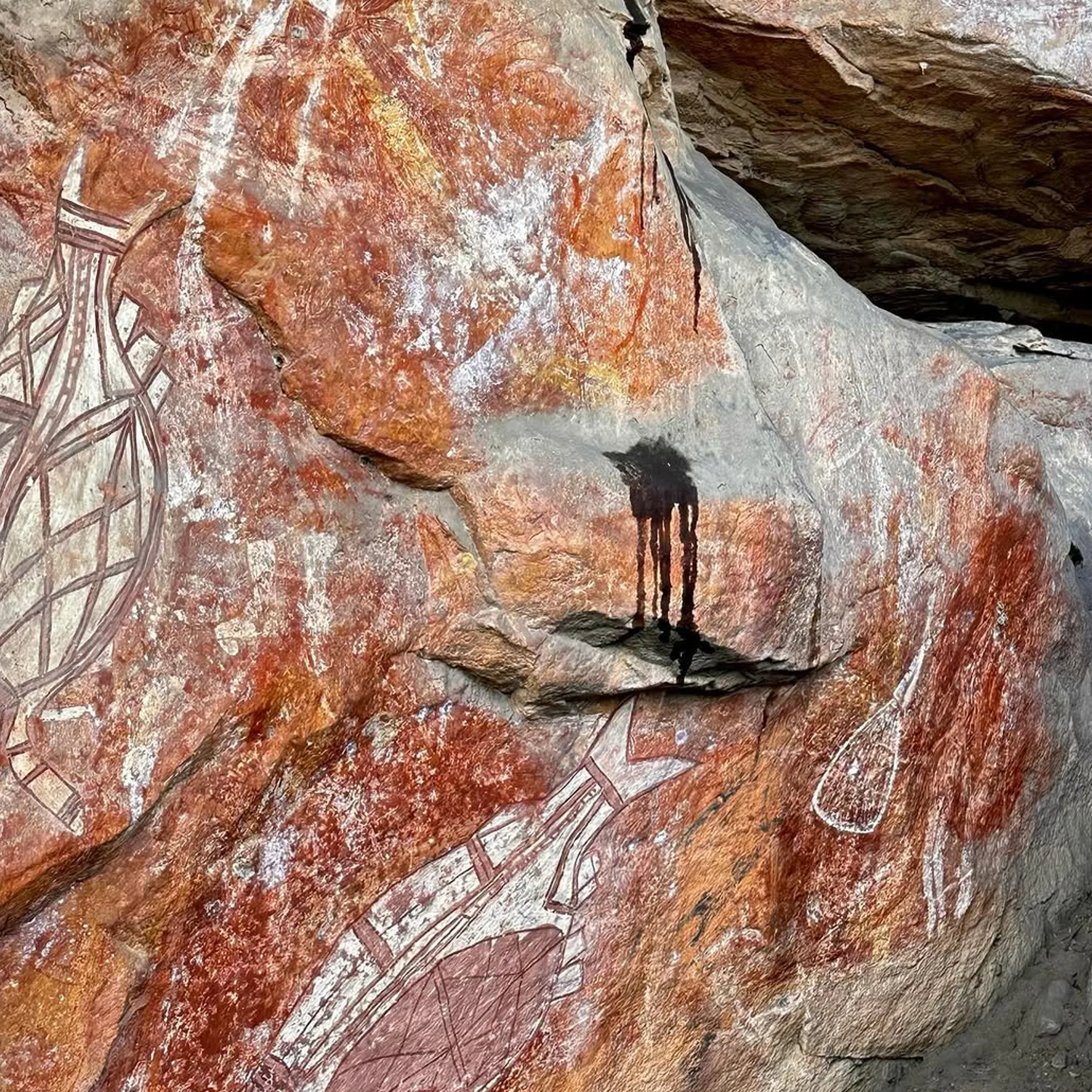
Bininj/Mungguy culture has left its mark on the sandstone outliers and rock shelters of the escarpment, offering opportunities for scenic sandstone escarpment explorations. What you see in the form of paintings are not merely old images on stone but a record of Country, of food and ceremony, of contact history and ancestral beings.
Of the 5,000 or so recorded rock-art sites in the 19,804 square kilometres of Kakadu, only a select few are accessible to the public, a measure that allows for some meaningful viewing while the more fragile heritage is left undisturbed.
To Read The Cultural Landscape
The Arnhem Land escarpment is a fine backdrop but also a provider of shade and seasonal refuge. Here are the Aboriginal paintings done in ochre and other natural substances. Some are faint and demand a good deal of patience from the viewer.
It is the Bininj/Mungguy custodians who determine how these places are to be used and understood. There is knowledge for public consumption and then there is information that is not to be made the subject of casual talk or put to camera; a sensible visitor will not need to be told twice.
Ubirr Galleries And Lookout
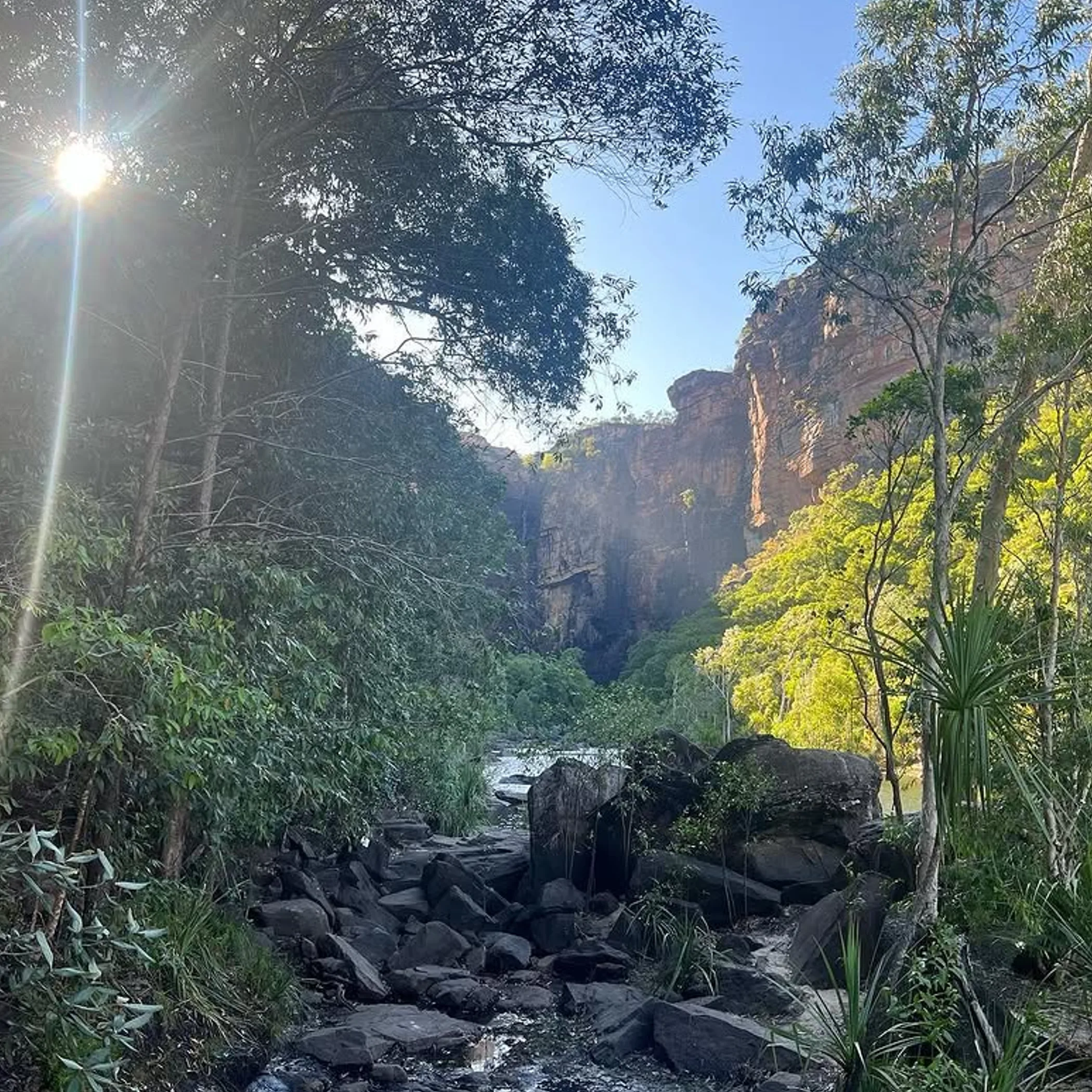
A walk through the sandstone country at Ubirr is something to remember and the rock art is easily come by. From the lookout one has a wide vista over the Nadab floodplain and into Arnhem Land.
The circuit is short enough for most, though the track becomes arduous in the heat. Make it an early or late day excursion, have your hat and water and do not putter through the galleries as if you were in a hurry to catch a plane.
At Ubirr
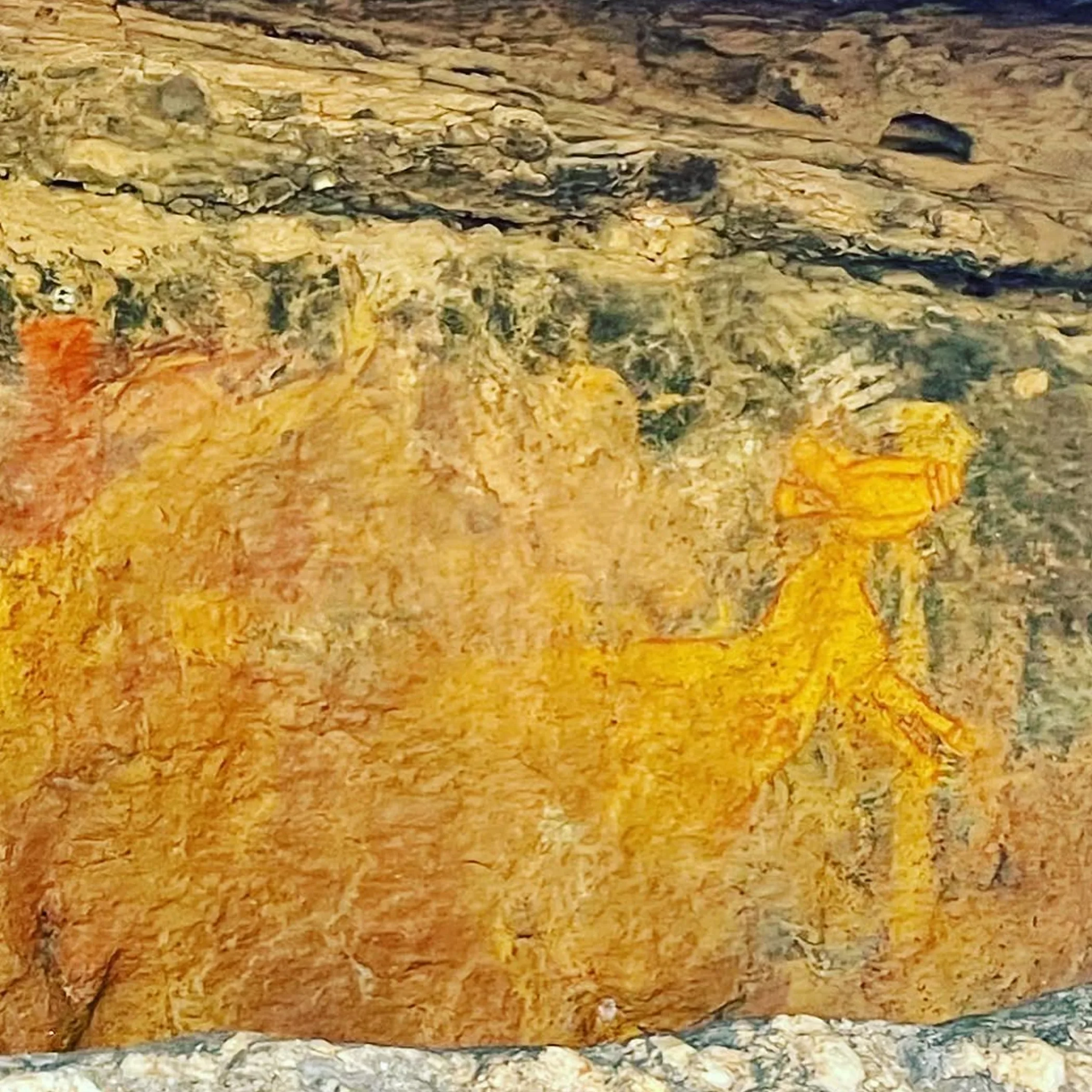
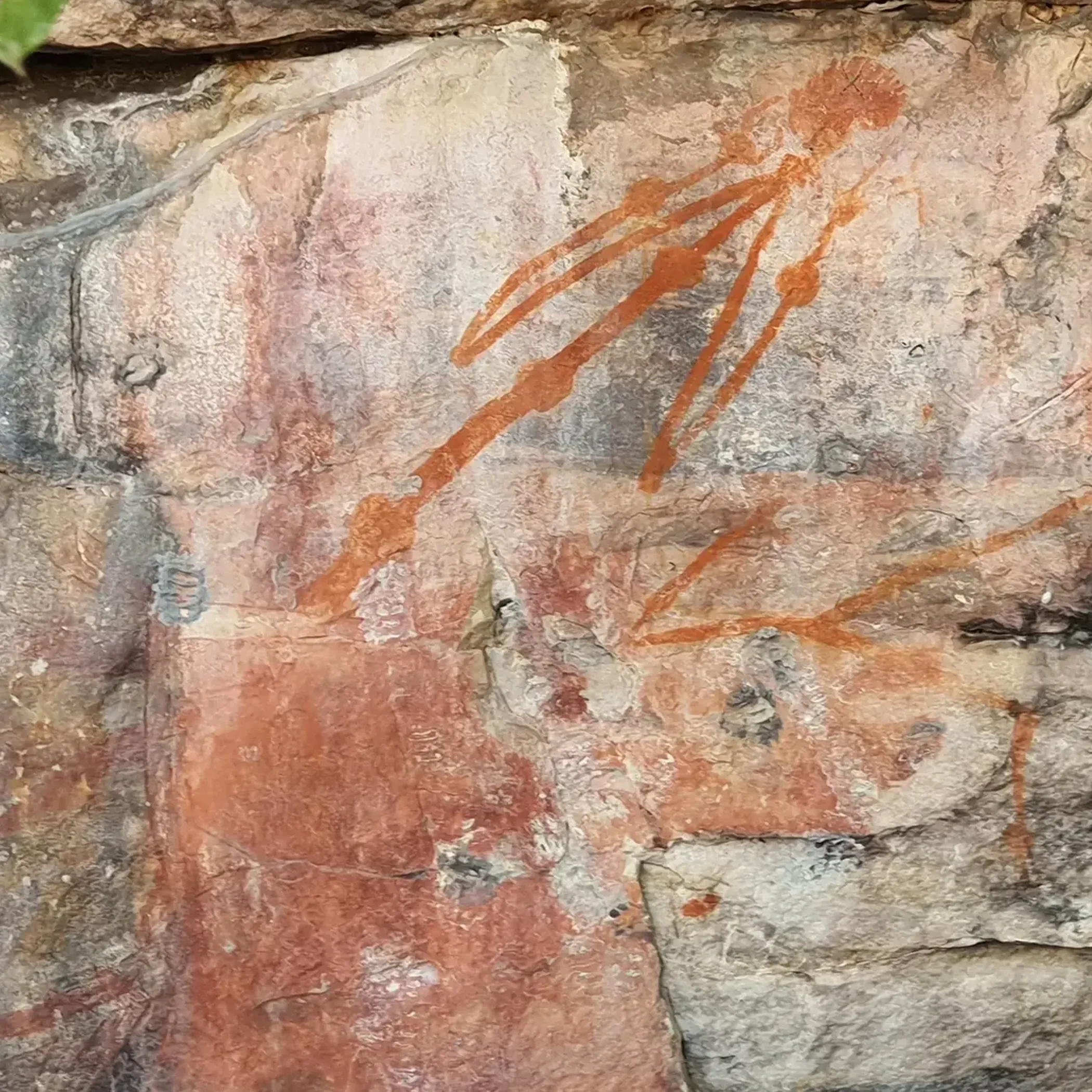
Among the paintings you will find the odd thylacine-like figure as well as kangaroos and fish, some of which are part of the cultural teaching. There is context to be had from the interpretation panels but they will not cover every nuance.
The climb to the lookout has its share of exposed and uneven sandstone. It is hardly a technical affair but wet rock and bad shoes can be exasperating. See that children are close at hand and stick to what is marked off for visitors.
When to go to Ubirr
You will find the car park and viewing areas well populated in the late afternoon when the light is right over the floodplain. An early morning is quieter and less of a temperature. In the dry season you can count on the road and walking conditions being predictable; in the wet, flooding and rain will alter access in a hurry.
Consult the official Parks Australia Kakadu National Park information for any closures before you set out and take the notices as instructions.
Burrungkuy and Nourlangie
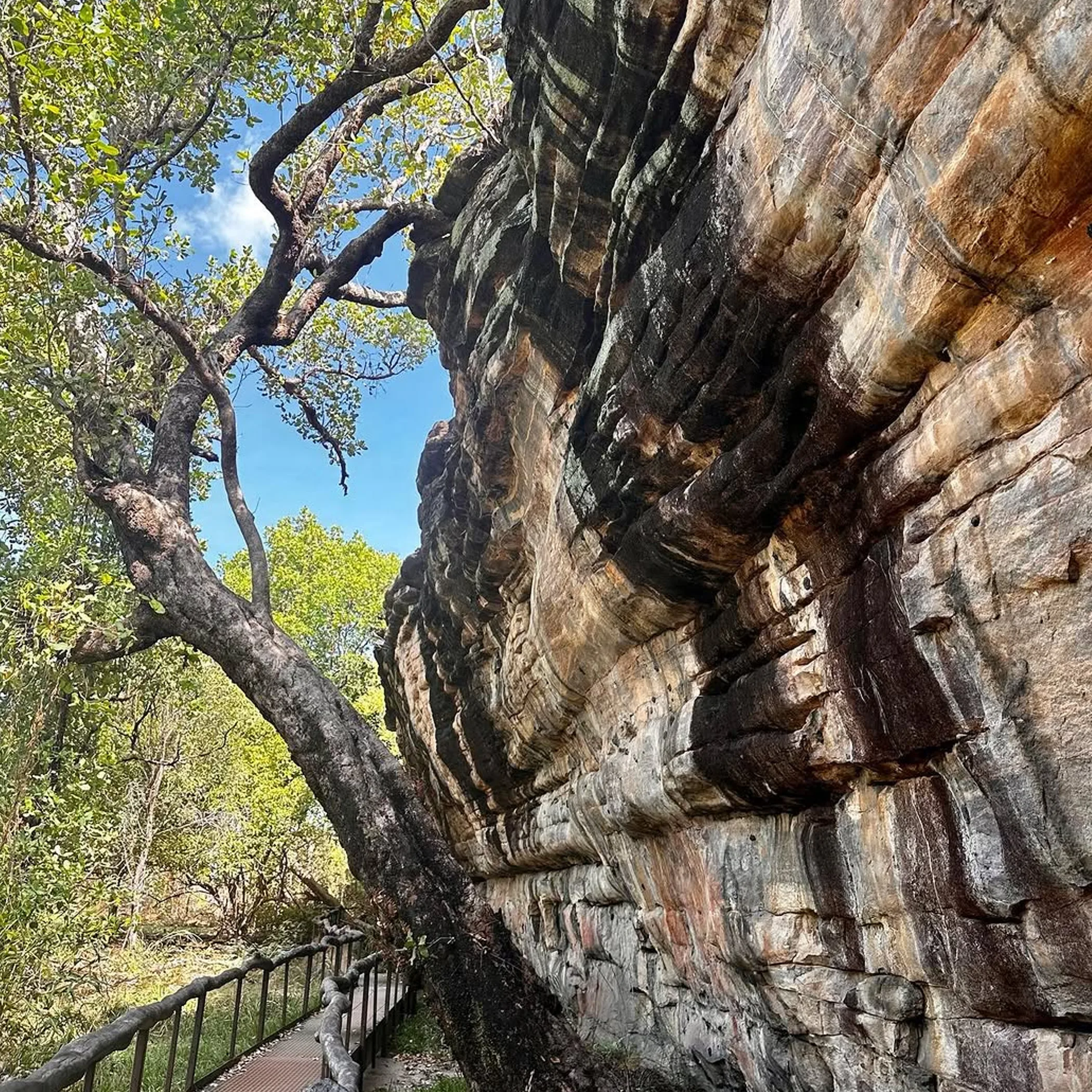
Under the sandstone formations of Burrungkuy, or Nourlangie as it is usually called, are some of the most frequented of Kakadu’s galleries. It is a compact site where several interpretive stops put art and shelter in context.
For a traveller wanting to see a range of rock shelters in one go Burrungkuy is very useful. Do not let the map deceive you into thinking the walking will be brisk; the tropical heat and the need to stop at the galleries will slow things down.
Rock art at Burrungkuy
Figures here are of hunting and creation, and of Namarrkon the Lightning Man, whose story is of the Top End’s violent storms and the kind of seasonal knowledge that is part of Country.
One need only look at the paintings to appreciate the case for preservation. There are images of great power and clarity to be seen, then there are those that have been diminished by time, moisture, dust and smoke or from too much human contact. Where the signs say so, do not put a hand on the rock, use water or a flash, or rub at any dirt.
Walking Beyond The Gallery
While the main gallery tends to draw all eyes, the tracks in the vicinity can put things in better perspective. Make note of the sandstone formations, how the shelters are placed in the North Australian landscape and any variation in the vegetation. It is more satisfying to stop and take in the Country than to regard every painting as something apart from its surroundings.
Do not let the map deceive you into thinking the walking will be brisk; the tropical heat and the need to stop at the galleries will slow things down. When the heat is on, a brief outing in the morning is preferable to a protracted walk done with what might be called heroic but medically inadvisable optimism.
Anbangbang Gallery And Walks
A key feature of the Burrungkuy area is Anbangbang Gallery with its Aboriginal paintings in a rock shelter; it gives an idea of the way the site has been put to use and come back to over the years.
Those who would like some scenery and movement will find the walks around the escarpment to their liking, though with uneven ground and rock in full exposure one should let the body be the judge of the day, not the zeal of the one who put together the itinerary.
Practical Gallery Tips
Have a word with the signs before you start photographing, as conditions and cultural restrictions in some areas may dictate otherwise. Be of low impact: keep your voice down, stay on the track and let other visitors have space for a quiet look. Put food outside the shelter.
For young children or older members of the family, it is best to divide the visit up. There is no loss of the culture’s value in opting for the shade of a shorter circuit. A sensible interlude is to be had rather than a mutiny of the family by a sandstone wall.
Nanguluwur’s Quieter Shelter
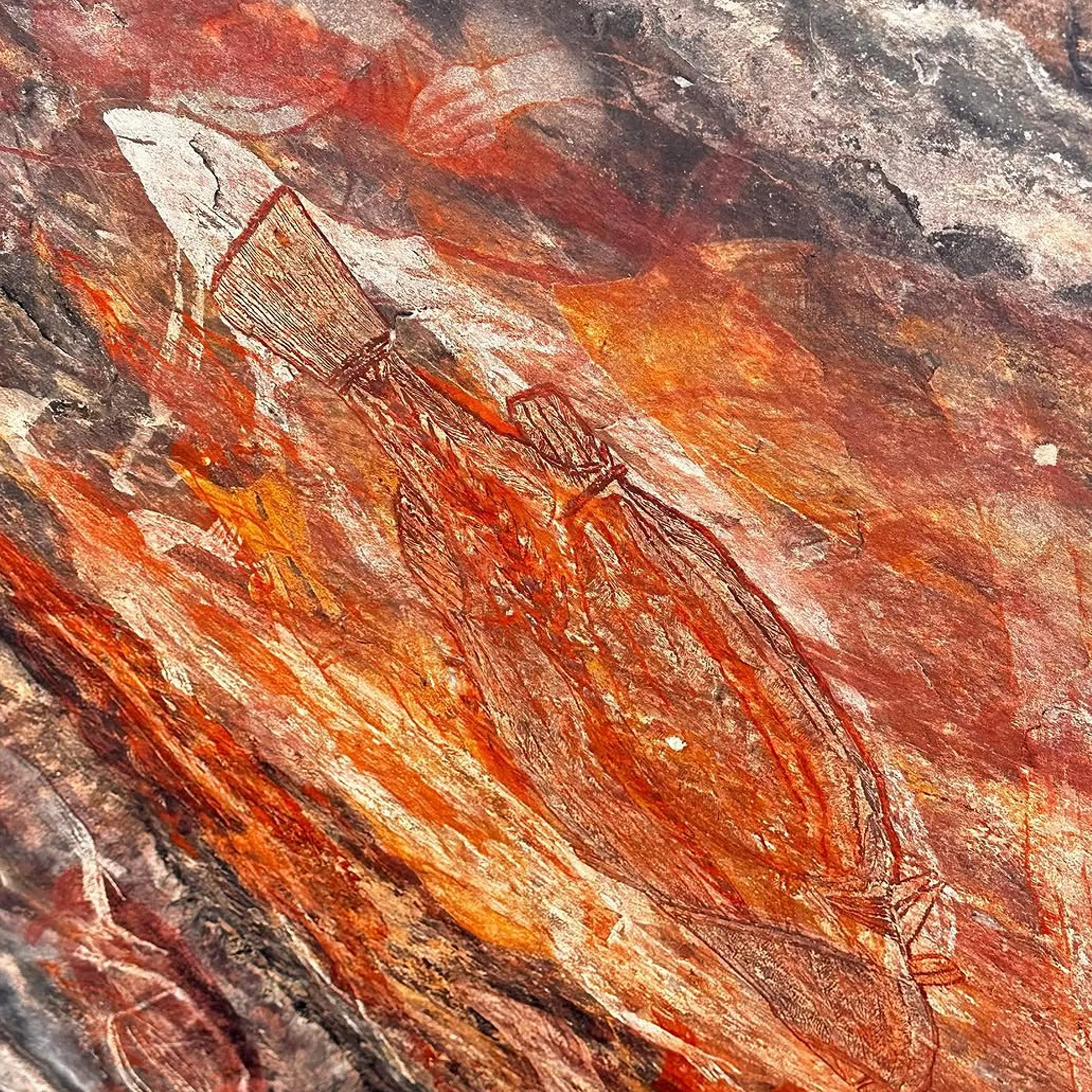
You will have to put in a longer walk to get to Nanguluwur than to the more readily available galleries. It is a rock shelter for the visitor in search of some quiet who does not mind the heat and carrying his own water for a reward that is not so instant.
The paintings here offer a further view on the ancient art and history of contact in Kakadu. But in poor track conditions or the height of the day it is not for everyone.
Who Should Choose Nanguluwur
The slower bush track of Nanguluwur is for the reasonably fit walker who can do with little in the way of shade. It is not the place for anyone with mobility issues, a sensitivity to heat or very small children, nor for the traveller short on time between engagements.
Do not labour under the notion that the kilometres make for a more genuine experience when it comes to cultural significance. You should go to Nanguluwur if the conditions are right for you, not out of some compulsion to tick off the names on a park map.
Compare The Main Sites
To avoid trying to cram every gallery in on a sweaty afternoon, make a plan based on the different mix of art, access and landscape each has to offer.
| Site | Best For | Access Character | Allow |
|---|---|---|---|
| Ubirr | floodplain views, the lookout and rock art | a short circuit of uneven sandstone and a climb to the lookout | 1–2 hours |
| Burrungkuy (Nourlangie) | cultural interpretation and a number of galleries | marked routes, some of them exposed and uneven | 1–2 hours |
| Anbangbang Gallery | to see the layers of Aboriginal paintings at close quarters | within Burrungkuy, as conditions allow | 30–60 minutes |
| Nanguluwur | a longer bush walk to a quieter shelter | demands fitness, sun protection and water | several hours |
Plan Your Kakadu Visit
With a park this size and roads to match, and mobile service you cannot count on, planning is essential. See to your fuel, rations, water and permits in town prior to departure, especially in busy times.
The majority will be in a campervan or private car or on an organised tour. A guide takes the stress out of the navigation and provides cultural context; to drive yourself is to have control of where you stop. Whichever the case, road and access notices should be checked first.
One-Day Priority Plan
Ubirr or Burrungkuy, not both and not at any old time of day. The former is for the rock art and the lookout, the latter for a more intense cultural encounter across several galleries.
- Be sure to have sturdy footwear, sun protection and provisions before you set about it in the morning.
- Make of the day’s cooler hours what you will at the gallery you have put down as your destination, but be sure to give the interpretation a close reading.
- When you are done, put in some time in the shade for a break and then make your way to something else in the vicinity.
- You can put in extra time for a guided cultural experience or simply wrap up before it gets too hot.
Costs And Transport
What you put out in costs is dependent on where you come from, the vehicle and accommodation you have and if you are after a guided tour. Put fuel, meals and park entry into the budget, along with camping or other lodging. Fees and access rules are subject to change so you would do well to check with official Kakadu visitor information for the figures before you leave.
As for getting from one remote site to another, do not count on a last minute taxi, local bus or rideshare to see you there; a private car or an organised tour is the sensible way to go. If you are on your own, inform someone of your route and have any necessary information to hand before you get to where reception is poor.
Seasons And Track Conditions
Access is more of a given in the dry season though you will have to contend with the heat of the afternoon and larger crowds. The wet brings its share of powerful storms and lush floodplains as well as roads that are hard going; flooding or storm damage will see some sites and tracks shut down for safety.
In northern Australia cyclone and bushfire alerts can put a spanner in the works. A trip report from last year is no guarantee a route is open today. Kakadu has no obligation to accommodate your itinerary for sentimental reasons when conditions dictate otherwise.
Safety In The Top End
On the longer walks such as Nanguluwur you will want to have more water on hand than you might think. Put on enclosed shoes and sun protection and take a rest before you are worn out. Be on the lookout for heat illness, uneven sandstone, branches coming down or anything made slippery by rain.
Near a waterway be croc-wise and heed the signs. There is no approaching wildlife or feeding them, nor swimming where you have not been given the nod. Secure your food and put your rubbish away. Even with perfect planning a mozzie will find you.
Respect Cultural Heritage
One does not enter these places as if they were an outdoor gallery with no rules; they are in the care of Indigenous custodians. The Bininj/Mungguy have the final say in the protection and interpretation of their cultural sites.
It is a matter of listening and showing respect. Obey closures, keep to the track and do not put your hands on the rock shelters or paintings. You would ask permission before photographing a ceremony or person and not put out sensitive information like it was a memento.
- Have your water, food, a bag for rubbish and sun protection.
- Barriers and marked tracks are to be observed.
- No touching, chalking or in any way disturbing the art.
- Photography restrictions and cultural signs must be followed.
- Permits and any wet season closures should be verified prior to travel.
- A low voice and room for other visitors is in order.
Expectation Versus Reality
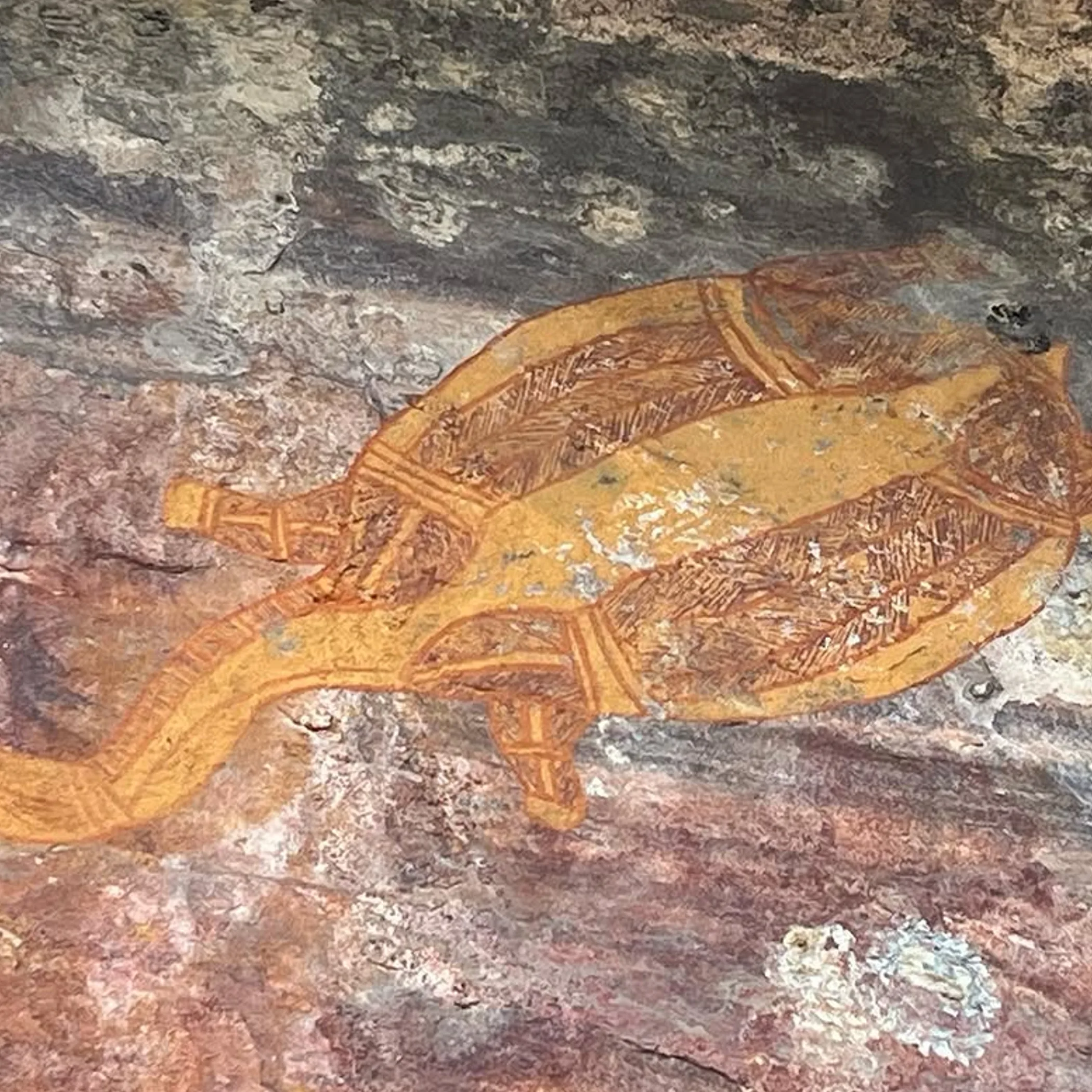
You may expect bold paintings that are simple to put on camera. The reality is some of the better art is faint or partially hidden and makes more sense in context than on a phone screen.
Or that the sites are all within easy reach. Kakadu is of such size that it takes time to drive between them and you will encounter corrugations and the odd facility of the bush basic variety rather than boutique. That is what you are there for, so long as you are ready for it.
Questions Travellers Ask
Which Site Is Best For First-Time Visitors?
Ubirr is the usual recommendation for a first visit, offering a good mix of accessible rock art, a walking circuit and a vantage over the floodplain. But Burrungkuy is just as worthwhile if you want to put in some time with the cultural side of things across a number of galleries.
Are Kakadu Rock Art Sites Suitable For Children?
Families are welcome at Ubirr and Burrungkuy so long as the adults are on top of the situation with the heat and uneven ground. Make the walks short and have plenty of water. Nanguluwur is a longer affair and calls for more judgement.
Can Visitors Photograph Aboriginal Paintings?
The rules will differ from place to place. Rangers and signs will tell you what is allowed. Do not use your camera to be a nuisance and under no circumstances touch or wet the rock. If a sign says no photographs, it means no photographs, not “I will just have a quick one”.
Do I Need A Guided Tour?
Not to gain access but a guide can be of practical assistance and put things in a cultural perspective. Those travelling independently should not assume that because no one is saying anything they are free to go where they like; read the notices and guidelines.
Can I Visit During The Wet Season?
You can at times but things can turn around in a hurry with the wet season. Road damage and closures from storms and flooding can impact on Ubirr, Burrungkuy and Nanguluwur. Be flexible with your plans and check the state of play before you set off.
Make The Visit Count
There is little point in rushing the escarpment galleries at Kakadu. Pick a site or two to suit your fitness and the time you have and consider each shelter a piece of cultural heritage.
I have found the finest explorations of the sandstone are those where you can leave the place as you found it. Patience and water and an ear for local advice will serve you well. When you are done making an issue of the itinerary the art is still there.
